By political observer and advisor globalaffairs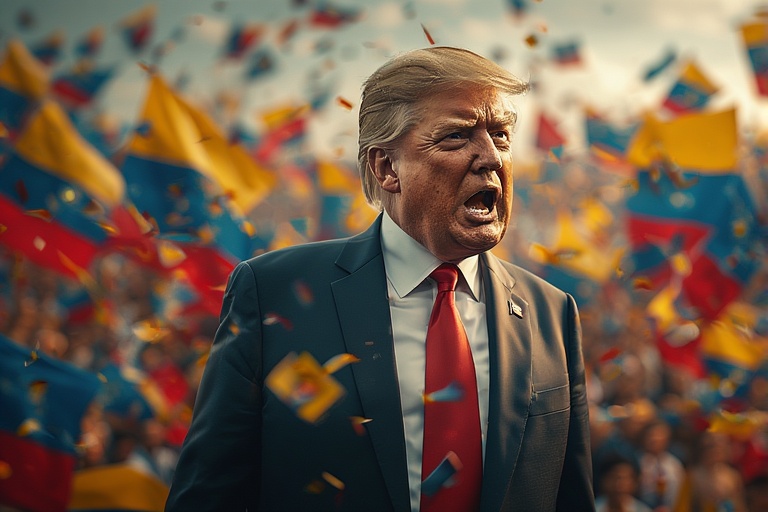
When Trump speaks about Venezuela these days, the tone is not hedged in careful diplomacy, but direct, sharp — more like a warning than a policy statement. The U.S. has struck multiple vessels Allegedly trafficking drugs from Venezuelan coasts. The strikes, sometimes lethal, are presented as part of a broader “anti-narcotics” campaign. Shortly afterward, the U.S. did something dramatic: Trump declared the airspace above and around Venezuela closed, telling airlines, pilots — and traffickers — to stay away. Meanwhile, the U.S. deployed its largest naval force in decades to the Caribbean and neighbouring waters — a show of force that, on the face of it, is justified by the fight against illicit drugs.
On paper — “drugs,” “narco-terrorism,” “protecting U.S. security”. But beneath that carefully staged narrative, a different logic begins to emerge — one tied to resources, power, and geopolitics. And central to that logic is oil.
Venezuela sits atop one of the largest crude-oil reserves in the world. Its economic potential is enormous — though in reality, decades of mismanagement, sanctions, corruption, and crumbling infrastructure have battered its ability to fully exploit that potential. Yet, despite mounting American pressure, recent data show that Venezuela’s oil exports remain substantial: as of December 2025, its exports rose to around 921,000 barrels per day, reaching the third-highest monthly level of the year. That demonstrates that, even under strain, Venezuela’s oil remains a real asset — one that could draw intense international interest if someone managed to destabilize or change the regime controlling it.
With the U.S. branding alleged trafficking networks — including state-linked ones — as terrorist organizations, it acquires a kind of all-purpose justification for a wide range of aggressive actions: asset freezes, sanctions, intelligence operations, covert activity, even military strikes. Once you label your opponent a “narco-terrorist,” many tools become available under the umbrella of “counterterrorism.” And crucially — that label doesn’t require the kind of transparent, public, verifiable proof that courts or international observers might demand.
That very lack of transparency deepens suspicion. The U.S. has released videos or statements of strikes — but has rarely made available detailed public evidence: cargo manifests, chain-of-custody documentation, independent verification that the boats indeed carried illegal drugs. Human rights and legal observers have raised red flags, arguing that killing suspects in international waters — without trial, without due process — amounts to extrajudicial punishment, not lawful law-enforcement. That casts doubt on whether these are ordinary anti-drug operations — or something more strategic.
And the scale of the military operations seems wildly disproportionate to a “drug-boat interdiction mission.” The concentration of naval force, the closure of airspace, the presence of intelligence agencies operating inside Venezuela — these are the tools of geopolitical pressure and regime leverage, not just policing smugglers.
So when you step back and look at the whole picture — oil wealth, persistent exports despite sanctions, high geopolitical stakes in energy, the heavy militarization of the Caribbean, the labeling of alleged criminal networks as “terrorists,” the lack of public verification — a strong hypothesis emerges: the “war on drugs” may be less about narcotics, and more about controlling resources, power, and influence. In short — to use drug-trafficking as a pretext for strategic interference.

If that is the real aim, what could follow? The tools are set: airspace closure, naval dominance, covert agency operations, legal levers under “anti-terrorism,” pressure on transportation and trade. With those tools, it would not be difficult to imagine deeper intervention — perhaps targeting oil infrastructure, undermining the existing government’s control, or paving the way for a political or regime change. The fact that oil exports remain robust — even under pressure — could make Venezuela a prize too tempting to ignore for those who believe that controlling its resources means controlling a piece of global energy balance.
Of course — it’s possible that some of those being targeted are indeed involved in real narcotics trafficking; organized crime does exist, and illicit networks operate across many countries. I’m not arguing that all claims are false. But the asymmetry is striking: other Latin Americ
an countries — historically associated with cocaine routes, or with far worse trafficker networks — are not currently subject to the same level of military activity. Why single out Venezuela, if not because there is something more than just drugs at play?
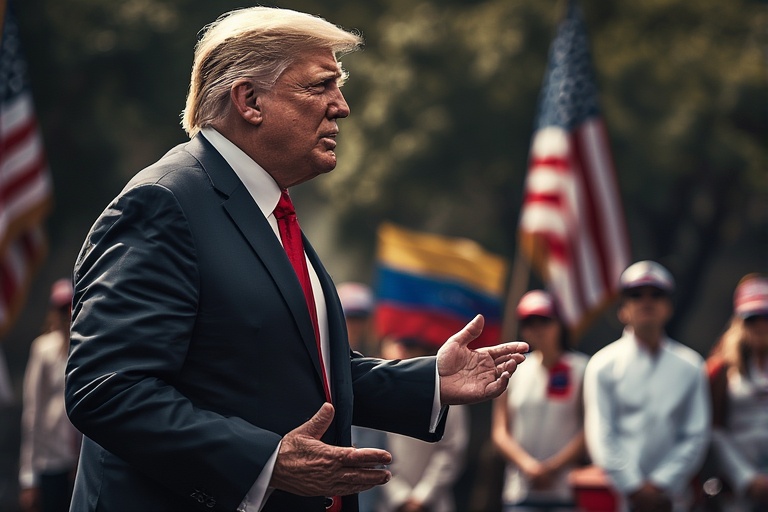
Moreover, the absence of transparent proof, coupled with heavy-handed military and covert methods, undermines the legitimacy of the narrative. It raises the risk that under the mantle of “fighting drugs” we normalize interventions that effectively mix law enforcement, foreign policy, and war — without accountability, without due process, with disastrous potential for civilian harm, regime destabilization, and regional instability.
It’s easy — politically — to package such actions as “protecting Americans” or “fighting narco-terrorism.” It sells well at home, plays to fears about drugs. But geopolitics rarely operates on moral clarity. More often — it operates on power, leverage, resources. In this case: oil, influence, control.
All things considered, the “drug war” framing feels increasingly like a cover story — not the real story. And if we allow that logic to take hold, we risk opening a dangerous precedent: that superpowers may selectively label other states, then impose military pressure, interfere with sovereignty and natural-resource control — all under a veneer of moral urgency.
For Venezuela — and for the region — the cost could be far greater than any single intercepted boat.